


WORLD.MINDS community consists of more than 1,000 high-ranked individuals, including Nobel Prize winners, statesmen, scientists, university professors, ambassadors, writers who have made a significant contribution to science, arts, and business. “World Minds” has a tradition of 12 years, 150 renowned speakers, more than 1,000 members, and even 3,141 ideas coming that came from numerous conferences.
According to WORLD.MINDS rules, conversations were held behind closed doors.
Serbia is the first country in the world, next to Switzerland, to host this important symposium, which brings together the world’s greatest thinkers.
This Swiss organization regularly organizes its meetings every December in Zurich.
Leading world innovators, scientists, business leaders, and artists, who presented ideas of the new era in an inspiring way, gathered in Belgrade at the prestigious WORLD.MINDS conference, where, among others, President of Serbia, Aleksandar Vucic and former German Chancellor Gerhard Schroeder spoke.
The gathering in Belgrade was attended by the winner of the Nobel Prize for Chemistry Kurt Wuthrich, a technology pioneer and one of the speakers at TED conferences, Tom Wujec, Osh Agabi, a neurotechnology expert and executive director of “Koniku”…
This year, Serbia was represented by: Teslagram, a technology that is being developed at the Institute of Physics and represents the best system of protection against counterfeiting, BioSens Institute, a research and development institute that develops, introduces and promotes advanced ICT solutions in agriculture and 3Lateral – the leading producer of digital human technology and creative content.
Rolf Dobelli, founder of WORLD.MINDS, said that he was very pleased when he was invited to come to Serbia, and had the opportunity to host WORLD.MINDS.
“This is an excellent opportunity for Serbian scientists and other thinkers to transfer their knowledge, experience, and ideas for a new future, in order to introduce their achievements to the wider circle of people from the international community” – Dobelli pointed out.
The Government of the Republic of Serbia has launched a partnership with a prestigious Swiss organization that will help bring the smartest people of our time to our country and give local experts the opportunity to exchange experiences and present their achievements, according to a statement from the Government of Serbia.
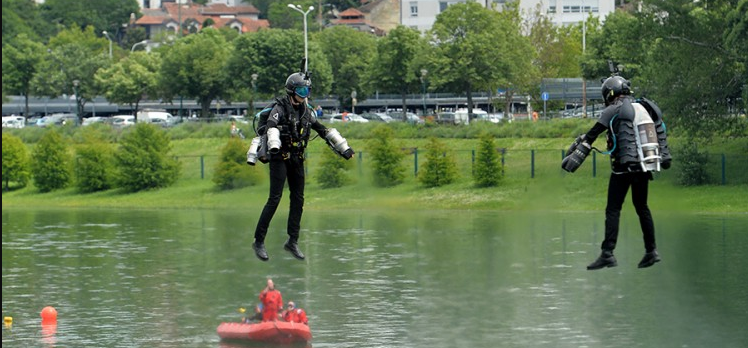
Richard Browning: Runs in jet suits will be in Belgrade
I am very excited to be able to present my invention to Belgrade - said Browning , the innovator and founder of the Gravity start-up company, who was one of the speakers at the World Minds Symposium at the National Theater in Belgrade.
Browning's suit is powered by a single large engine and six small jet engines on the hands that it controls. The suit has 1,000 horsepower and consumes four liters of jet fuel A-1 per minute, the same one used by combat and commercial aircraft. Fuel for Browning performance was provided by the Army of Serbia and company "Er Serbia". This is the 80th time to fly in this suit, and Serbia is the 26th country in which this unique invention was presented.
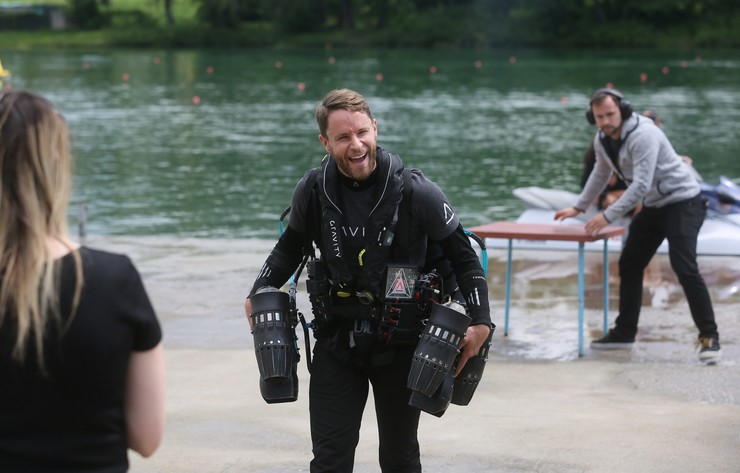
“The logical boundary that needed to be flown is flying. I started modestly, but without any pressure and data from the previous attempts of some people who wanted to do something like this. After a few months, a lot of mistakes and falls, today I'm here, a "flying man" with more than 80 flights in 26 countries. I plan to further develop jetliners, wing installation, and electrical version, and I hope to present them in Serbia, to which I will return safely.” - said Browning.
Rolf Dobelli: Serbia has a large number of talented scientists
Rolf Dobelli, the founder of the community "World Minds" before the beginning of the meeting, said that he was overwhelmed by the organization, that everything looked great, and commented that Serbia as the first country outside of Switzerland was rightly chosen to host the World Minds Conference.
“You have a large number of highly talented scientists, innovators and artists, I am very pleasantly surprised on this issue. I consider that Serbia is very underestimated, especially in the west and north of Europe, and I hope that this conference, but also the constant progress of your country, will change this picture and thus attract more attention to Europe and the world”- Dobelli told.
Marija Mitrović - Dankulov: An innovative solution to identify a fake drug
Marija Mitrović Dankulov, head of the Innovation Center of the Institute of Physics, talked about their very interesting project - Teslagram.
Falsified medicines can do more harm to your child than to cure him at all. But how to identify a counterfeit? What do you think if you had a small particle that you can add to drugs, in order to differentiate the original from the counterfeit. We have a solution for that. There are butterflies that exist for millions of years, and whose wings are unique, like a fingerprint - said Mitrovic-Dankulov.
The advantage of Teslagram's technology is, as she said, its wide scope of application.
"Teslagram protects your documents, products, credit cards, works of art, fashion brands, drugs, or software. Combined with a secure database, for example, as a blockbuster, Teslagram offers unparalleled protection of real-world objects and data objects in the digital world" - she explained.
Teslagram technology, the protection against counterfeiting developed at the Institute, is based on the high complexity of biological structures from the butterflies wings, rather than on expensive technologies for the production of protective elements.
"Nature creates structures whose complexity is far beyond the reach of all human technologies for nanofabrication. We do not produce security elements, we collect them from nature" - she added.
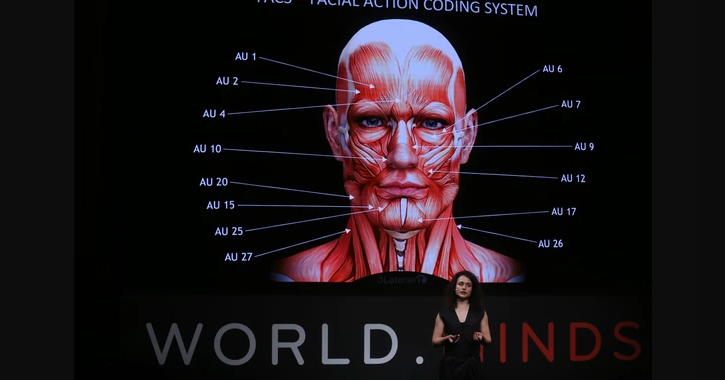
3lateral: "Digital people, think about it"
Milica Mastilovic and her brother Vladimir founded the 3lateral, Serbian startup that last year bought the company Epic games, a publisher of Fortnat's planetary hit. This investment is considered one of the largest in the Serbian startups so far.
At the World Minds Conference, Mastilovic talked about their work.
- Digital people, think about it. The fourth industrial revolution is approaching, and artificial intelligence is one of the most important of its parts. Research shows that people even observe in detail even small things on others' faces. Even very small babies can recognize faces, because this is one of the biggest visual sensations in the DNA of people in our being. Company 3lateral develops software and scanning faces. First, the basic facial expressions are scanned, and then they develop detailed models where even the smallest details, spots and wrinkles on the skin are seen. Thus, models that show motion, moving faces can come to mind. Perhaps the biggest application is currently in the entertainment industry, but when you look a little deeper, you will see that it can be used in medicine, or in biometrics to create a recognition model - she said.
Mastilovic finally showed a short clip showing how the face is changing while we are talking, which could be an insert from a film made in the 3Lateral Laboratory.
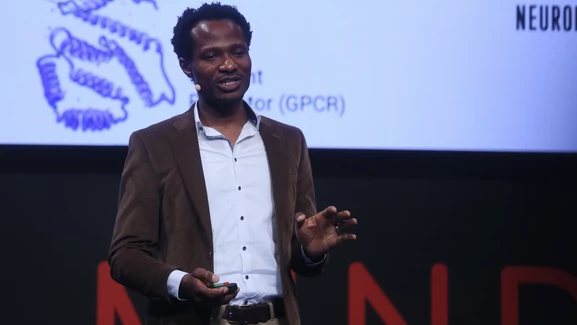
Osh Agabi: Why not digitize smells?
"People can distinguish trillion different scents. Why did not we digitize them then? Why did not we smell the formula of Coca Cola, when we all can recognize the favorite dishes prepared by our grandmothers. Because we notice mainly very strong scents. We at Konik have explored how to develop chips that can help us eliminate unpleasant odors ... and make devices that use chips that have live elements ..." - explained Agabi to the audience at the Wolrd minds conference.
Vesna Bengin, Biosense: We Will Have 10 Billion People On Earth And We Need To Produce More Food
Vesna Bengin, one of the founders of the Biosense Institute, talked about the new era of agriculture and the importance of scientific research in this field.
"By the year 2050, we will have 10 billion people on Earth and we will have to produce 70% more food. How to make agriculture more efficient? We must first understand this ecosystem in order to optimize it - Vesna.
With the help of sensors we can collect a huge amount of data, then with the help of algorithms and artificial intelligence to determine which varieties and crops should be planted in which places ..."
"There are too many parameters involved in calculating this equation, from the profit that farmers want, through the risks that they are willing to take ... Using artificial intelligence, we have come to 1.2 million euros of profit more, because with the processing of data we concluded that the best to maximize the risk, at least at the same time graphic shows us" - concluded Bengin.
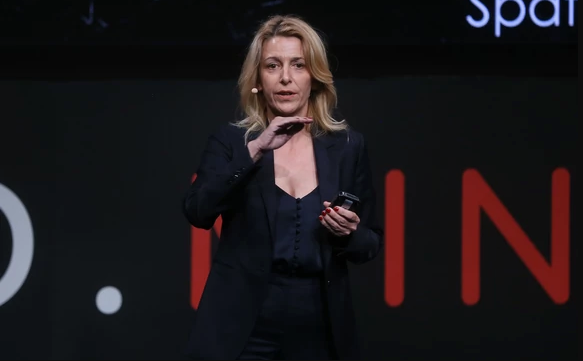
Simone Shurle-Finke: Nano-particles help in the detection of cancer
Nano-particles have always been among us since the time of bacteria. Today, they are used in medicine, such as tiny nano-robots, and used in the diagnosis of cancer. It works by inserting a nano-shell that is activated at the site of the tumor, and pulls out a nano-sensor that is explored using markers - she explained.
She added that "physics is changing" and that nature has developed various systems that can move through the body, and nanomedicine helps us to discover individual changes and diagnose different conditions.
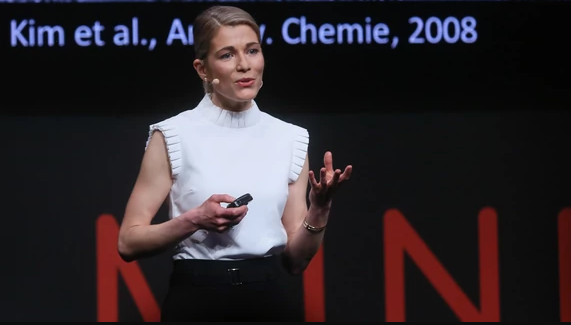
Art and Robotics
Aparna Rao, an artist from Bangalore, is working with robotics around the world on an animatronics project. She first showed artwork, objects and installations into which she incorporated the animations that give these works life. Sounds are inserted into individual installations, which gives a specific impression of the presence of animals or other beings.
"The combination of art and robot has brought us great works of art, both animated and static, in the form of different geometric bodies that attract attention. Some of them have a very practical application, for example, microwave ovens in an interesting form" - explained Rao.
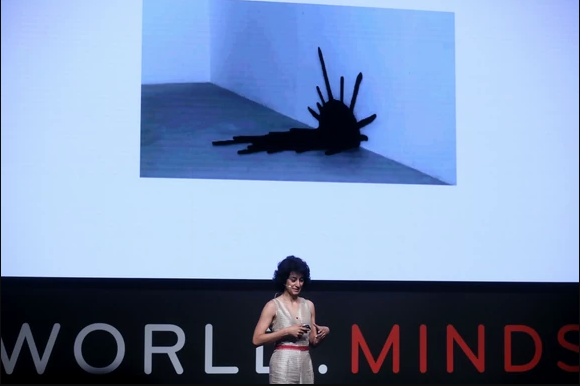
Tom Wujec: Automation changes our life from the roots
"The impact of automation on our lives is great. Transforms the complete way of life, transport, medicine ... About 45% of jobs will be automated in the future" - said TED speaker and technology pioneer and entrepreneur Tom Wujec.
This year, he says, we will produce more individual transistors for chips than rice grains, according to the American transistor manufacturer's association. Growth is exponential. High growth records and sensors, which can be found in nanowires, are almost imperceptible, and are used literally everywhere, he added.
All of this enables us to express unlimited expression, we can put the right information in the right place at the right time.
"Today we buy intellectual property, not a product, when we buy sneakers printed with a 3D printer. It's similar to chairs. The computer is among the tens of thousands of combinations of materials, shapes, colors ... in order to get the desired furniture in the end. Machine learning is applied across a range of industries and industry. It's present in art, where you can analyze the work of the great masters, the way they dragged the brush or applied layers of colors ... Things will never happen as slowly as today" - said Wujec and presented a piston with a self-propelled car that drives a slalom without any driver's influence.
It seems to us that we are growing very fast, but it seems that we are only at the beginning, and that we will experience enormous growth in computerization and digitization in the next 10 years, concluded Wujec.
Video “Interview with Ana Brnabić: The Digitalization of Serbia”: