


China started to create an ecosystem for companies to modernize their facilities and also rethink through their current business models. Especially the IT-sector with a fast-growing e-commerce business is supposed to become the backbone of the industry. Read more about the regional Centers of Excellence in our full article.
In 2016 the Central Committee and the State Council of the Communist Party of China published an innovation blueprint to make China an “innovative nation” by 2020 and an international leader of innovation by 2030 [1]. In the past, economic growth was mainly driven by exports of low-value-goods like toys or furniture. Today scientific development should contribute to up to 60 percent of the growth according to the guideline.
Beijing started to create an ecosystem for companies to modernize their facilities and also rethink through their current business models. Especially the Chinese IT-sector with a fast-growing e-commerce business is supposed to become the backbone of the industry. Accordingly, one fourth of the Chinese artificial intelligence (AI) companies is located in Beijing [2]. And there are lot more to be expected, as not even half of these companies have passed A-round financing for venture capital [3]. You Jin, deputy director of the Beijing Municipal Commission of Economy and Information Technology (BMCEIT) explains this with the innovative and entrepreneurial atmosphere, capital and also patent protection in Beijing [3]. The main fields of research these AI companies address are health care, retail, household appliances, urban management, and self-driving [3]. The China Aerospace Science and Industry Corporation (CASIC) recently even launched a bimonthly journal titled Unmanned System Technology to encourage the development of such systems.
2’000 km south of Beijing, Shenzhen is well known as the financial and economic center but also acquired renown for becoming “China’s Silicon Valley” with a thriving electronic hardware industry. It is the birthplace of companies like Huawei or Tencent.
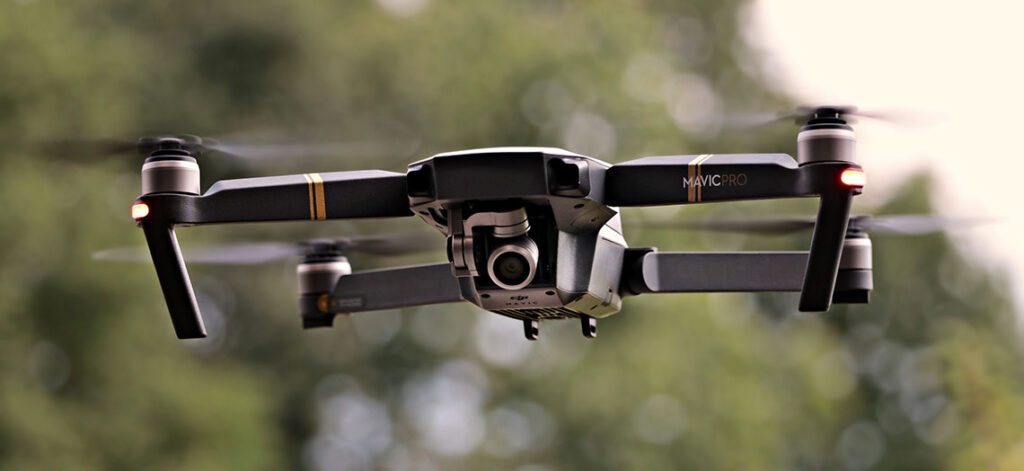
Taking SZ Da-Jiang Innovation Technology, better known as DJI as an example: Founded in 2006, DJI quickly became the leader of the unmanned aerial vehicle or drone market and holds more than 70 % of the global market with a revenue of approximately $1 Bn and more than 4’000 employees [4]. According to the Hong Kong Baptist University, Shenzhen has overtaken Hong Kong and Taiwan as one of the most innovative cities in the world [5]. Incubators like Nanshan Science and Technology Park are attractive coworking space both for Chinese and international companies, who value the production efficiency with relatively low costs. One major success factor could also be the existence of an industry called “Plan Company”. They enable entrepreneurs to launch their products in a very short time to market with their expertise in producing electronic parts and circuit boards. Start-ups can focus on the product while plan companies complement with production capacities, R&D, or electronic design [5].
Yangpu is known as the industrial area for Shanghai’s traditional and heavy industries such as textiles and shipbuilding. Shanghai used to be the economic locomotive of China and is anxious to keep this position with several initiatives. However, it has been among the slowest growing provincial-level regions in terms of economic expansion since 2008. The fact none of the “BAT internet giants” (Baidu, Alibaba, and Tencent) are headquartered in the country’s commercial capital is embarrassing to the city’s leaders. “It is a renewed effort by Shanghai to attract technology companies,” said Ray Lu, a director with Hotung Ventures [6]. Yangpu as the only region of Shanghai designated by the central government as a pilot zone for technology development. The district government announced that qualified foreign professionals working for technology firms will be attracted for example by being granted permanent residency to encourage especially start-ups [6]. In addition, the municipal government published a loss-proof measure to safeguard investments in venture capital. Investors can refund up to USD 450.000 of losses in Shanghai-based start-ups.
On a mid-term perspective Chinese centers of excellence will certainly become one of the most important players in the global software and electronic hardware landscape. The fundament for an innovative future in Asia is built and a large number of highly diversified high-tech companies are moving in.
[1] http://english.gov.cn/policies/latest_releases/2016/05/20/content_281475353682191.htm
[2] http://www.scmp.com/news/china/policies-politics/article/1947968/beijing-aims-lead-world-innovation-2050
[3] http://www.chinadaily.com.cn/a/201807/02/WS5b39ceeaa3103349141e02da.html
[4] https://www.yosuccess.com/success-stories/frank-wang-dji-technology/
[5] https://www.dragonsocial.net/blog/shenzhen-silicon-valley/
[6] https://www.scmp.com/business/china-business/article/2039358/shanghai-steps-efforts-attract-technology-businesses-boost