
Switzerland is a country of railways. To ensure that it stays this way, SBB, BLS, Schweizerische Südostbahn AG (SOB), the Rhaetian Railway (RhB) and the Union of Public Transport (UPT) are joining forces and getting the entire railway sector involved. The smartRail 4.0 programme is a collaboration that aims to get Swiss railways ready for the digital future.
Over the next few years, a number of technical production systems that are important for train travel will be replaced due to old age. At the same time, technology is developing at an ever increasing rate, offering railway companies new opportunities to improve efficiency and punctuality.
To ensure that railway customers genuinely benefit from the age of digitalisation, we are taking a coordinated and collaborative approach to our work with smartRail 4.0. As a first step, the concept will be consolidated and fleshed out and a more detailed plan produced in the period up to 2019. The smartRail 4.0 programme is divided into five subprogrammes and covers technological development over the next 20 years. We are developing new systems for the railway sector and are working together to achieve the following objectives: Lower costs. Greater capacity. Better punctuality. Increased safety.
Swiss rail industry
smartRail 4.0 is set up as a joint industry programme between SBB, BLS, SOB, RhB and UPT. The cooperation within the Swiss railway industry is already established. The steering comASrmittee and the project organisation of smartRail 4.0 are a collaboration of representatives of the Union of Public Transport (UPT), SBB, BLS, SOB and RhB. The other railway companies are integrated into the works via the UPT committees. Representatives of the above-mentioned railways also sit on the four steering committees of planning and operation, system modification, train control and vehicle architecture, both on the infrastructure and transport side.
International rail industry
International collaboration is hugely important. After all, Switzerland is not looking for an isolated solution. Achieving the goals and leading the railway into the future requires international cooperation. Requirements and a common architecture for major European railways are needed in order to create a competitive market for innovative components and systems and, if necessary, to jointly develop European standards.
Vision and objective
SmartRail 4.0 aims to achieve a substantial improvement at the core of railway production. Railway production includes all resources, systems and processes for the planning and safe execution of movements on the railway infrastructure. More capacity is to be provided on the existing track infrastructure.
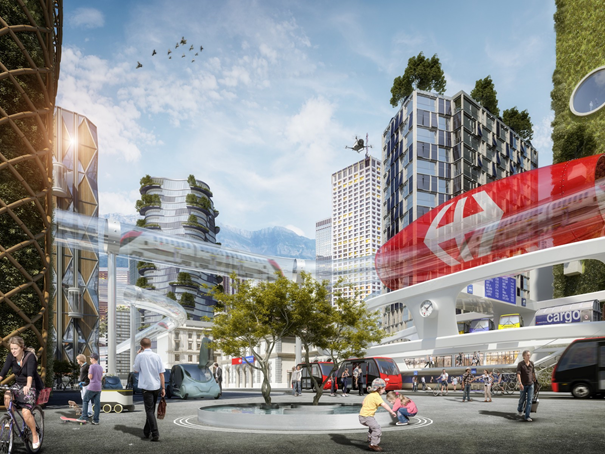
The concrete objectives of smartRail 4.0 include:
- Reducing the annual system costs in railway production by 450 MCHF (SBB only; infrastructure and vehicles)
- Increasing technical capacity by 15% to 30%
- Increasing safety, especially when shunting and on construction sites
- Increasing the availability of safety installations
- High data communications capacity for customers
Technical target vision
The technical target vision for smartRail 4.0 is based on existing ETCS protocols, but will reduce the current associated system complexity whilst also deploying new technologies. This will result in an overall architecture with homogeneously coordinated components that simultaneously define the scope of the programme:
- Physical rail infrastructure: SmartRail 4.0 relies on the existing infrastructure and does not require any compulsory adjustments. By contrast, there is no need to implement it on all signals, signboards and most track-release signaling equipment (GFM). This results in a 70% reduction in external installations and corresponding cost savings in construction and maintenance.
- COAT onboard equipment (CCS onboard application platform for trackside related functions): SmartRail 4.0 shifts functionalities from the infrastructure to the vehicle (for example localisation: from the electronic signpost to vehicle location accurate to the meter). With a fundamentally different approach similar to examples from the avionics and car manufacturing sectors, a standardised architectural concept is envisaged, with separation of hardware and software procurement.
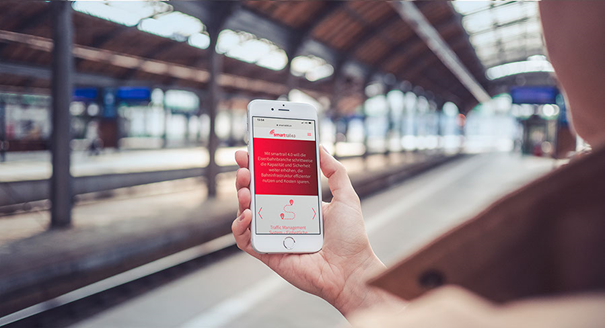
The full impact and thus the highest benefit is achieved by implementing all components. In order to reduce complexity, detailed phasing options have already been developed for full-coverage implementation.
Benefits
Lower costs
Lower infrastructure costs keep the railway competitive and have a curbing effect on the development of ticket prices: The full benefits of smartRail 4.0 can be expected to be achieved from 2040, in the amount of 450 million Swiss francs per year. Of this, 270 million Swiss francs per year will be accounted for by the expected reduction in the number of installations. This is the largest cost-reducing benefit driver. A further 180 million Swiss francs per year can be saved through process automation during planning and operation as well as reduced safety costs.
Increased capacity
With smartRail 4.0, trains can be located precisely on the network. From a technical perspective, this allows for a consolidation of the timetable. In addition, the automated timetable creation and calculation of scenarios in the event of disruptions leads to optimized train sequences and thus to a more customer-friendly timetable.
Improved punctuality
With smartRail4.0, a 70% reduction in external signal box installations and a significant reduction in equipment variety are planned. This will reduce the number of signal box disruptions by 50% compared to today. In addition, troubleshooting is simplified and accelerated. In total, the minutes customers are delayed can be reduced by around 2%.
Better customer service
Customers will not only benefit from greater frequency, fewer disruptions and improved punctuality but can also enjoy uninterrupted phone calls and a more powerful mobile network. The programme will also provide better customer information in the event of disruption, further improve safety in building and shunting processes and increase availability of safety installations by 50%. All thanks to connectivity.
Increased safety
The quantum leap in safety in automated railway production is a result of the combination of various changes. All objects in the station throat will now be electronically visible at all times. What’s more, there is also safe shunting, whereby every movement can be controlled or stopped at any time. The new visibility and controllability is used within the safety logic of smartRail 4.0 to safely and automatically prevent any kind of collision.